WHY THE INSTRUMENT RATING CHANGES EVERYTHING
The private pilot certificate teaches you to fly. The instrument rating teaches you to fly in the real world. Before your IFR ticket, every flight is weather-dependent — you're a fair-weather pilot, grounded by clouds, low ceilings, and reduced visibility. After your instrument rating, you become a pilot who can fly in the conditions that ground everyone else. You can depart Portland on a gray November morning, climb through the overcast, and arrive in clear skies above the clouds. You can fly approaches into Salem or Aurora when VFR pilots are sitting in the FBO waiting for the marine layer to lift.
In the Pacific Northwest, the instrument rating isn't optional for anyone who wants to fly year-round. Oregon's Willamette Valley averages 144 days of precipitation per year. Portland International Airport (KPDX) reports IFR conditions — ceiling below 1,000 feet or visibility below 3 miles — on roughly 25–30% of days from October through March. Without an instrument rating, you're grounded for a quarter of the year.
The question isn't whether to get your instrument rating. It's how to get it efficiently — without the slow, expensive, momentum-killing approach that most Portland-area flight schools use.
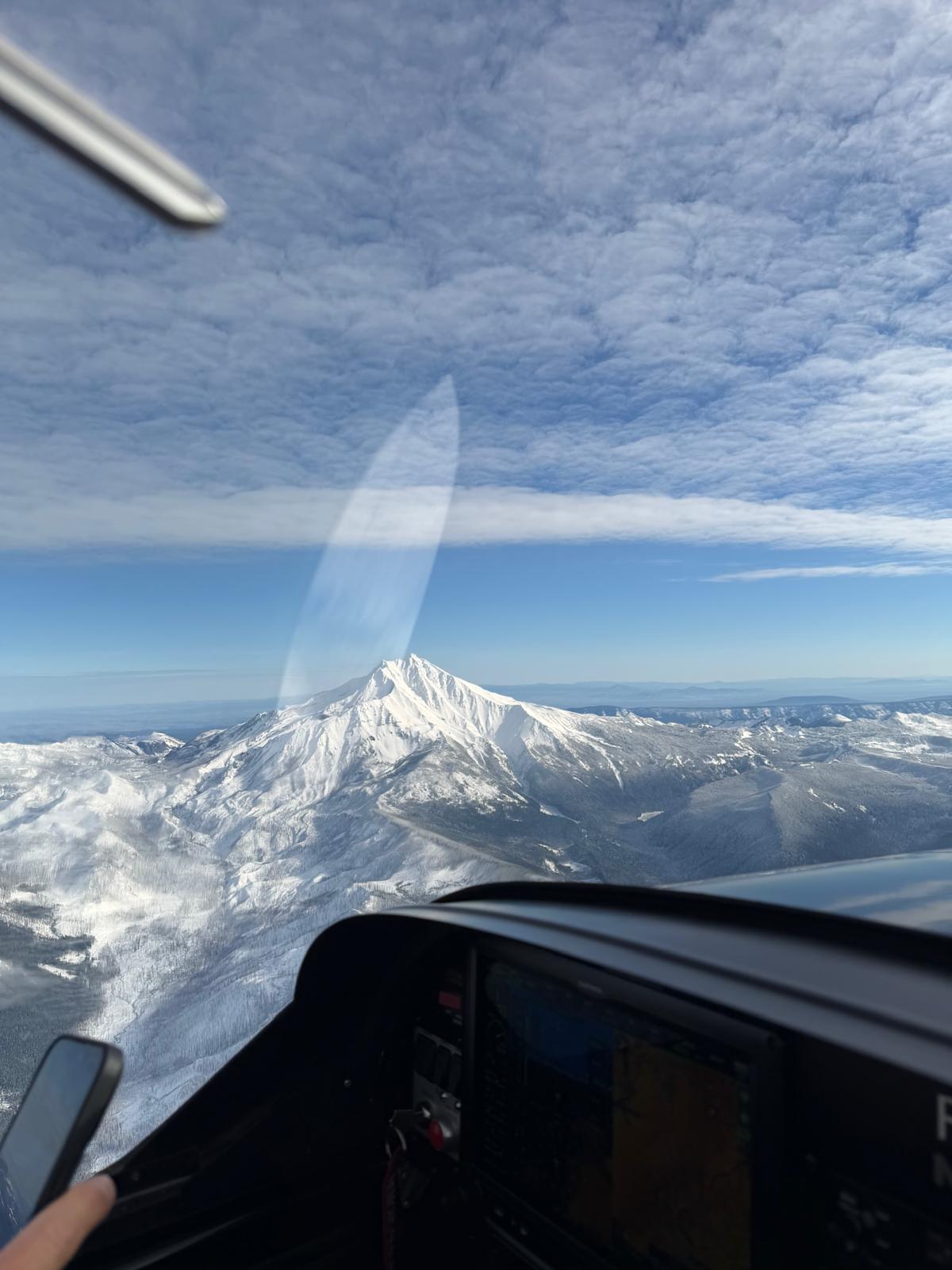
Above the clouds over the Oregon Cascades — the view that awaits every pilot who earns their instrument rating.
THE FAA REQUIREMENTS FOR AN INSTRUMENT RATING
Before diving into the accelerated method, it's worth understanding exactly what the FAA requires for an instrument rating under Part 61. You must hold at least a private pilot certificate with an airplane category rating. You need 50 hours of cross-country flight time as pilot-in-command. You need 40 hours of actual or simulated instrument time, of which at least 15 hours must be with a CFII. You need to pass the Instrument Rating Airplane written exam and an oral and practical checkride with an FAA Designated Pilot Examiner.
The 40-hour instrument time requirement is a minimum. Real-world completion in Oregon typically requires 50–65 hours of instrument time — particularly for pilots who are building their scan from scratch and learning glass cockpit avionics simultaneously. The accelerated method doesn't reduce the hours required; it makes every hour more productive so you reach checkride readiness faster.
THE 5-STEP ACCELERATED IFR METHOD
Sync Ground Study to In-Cockpit Execution
The biggest mistake instrument students make is treating ground school and flight training as separate activities. They study weather theory on Monday, then fly approaches on Friday without connecting the two. The accelerated IFR method reverses this: every ground session is tied directly to what you'll practice in the cockpit that week. You study ILS approaches the day before you fly ILS approaches. The concepts land in your memory because they're immediately reinforced by physical execution.
Train in Your Own Aircraft — Not a School's
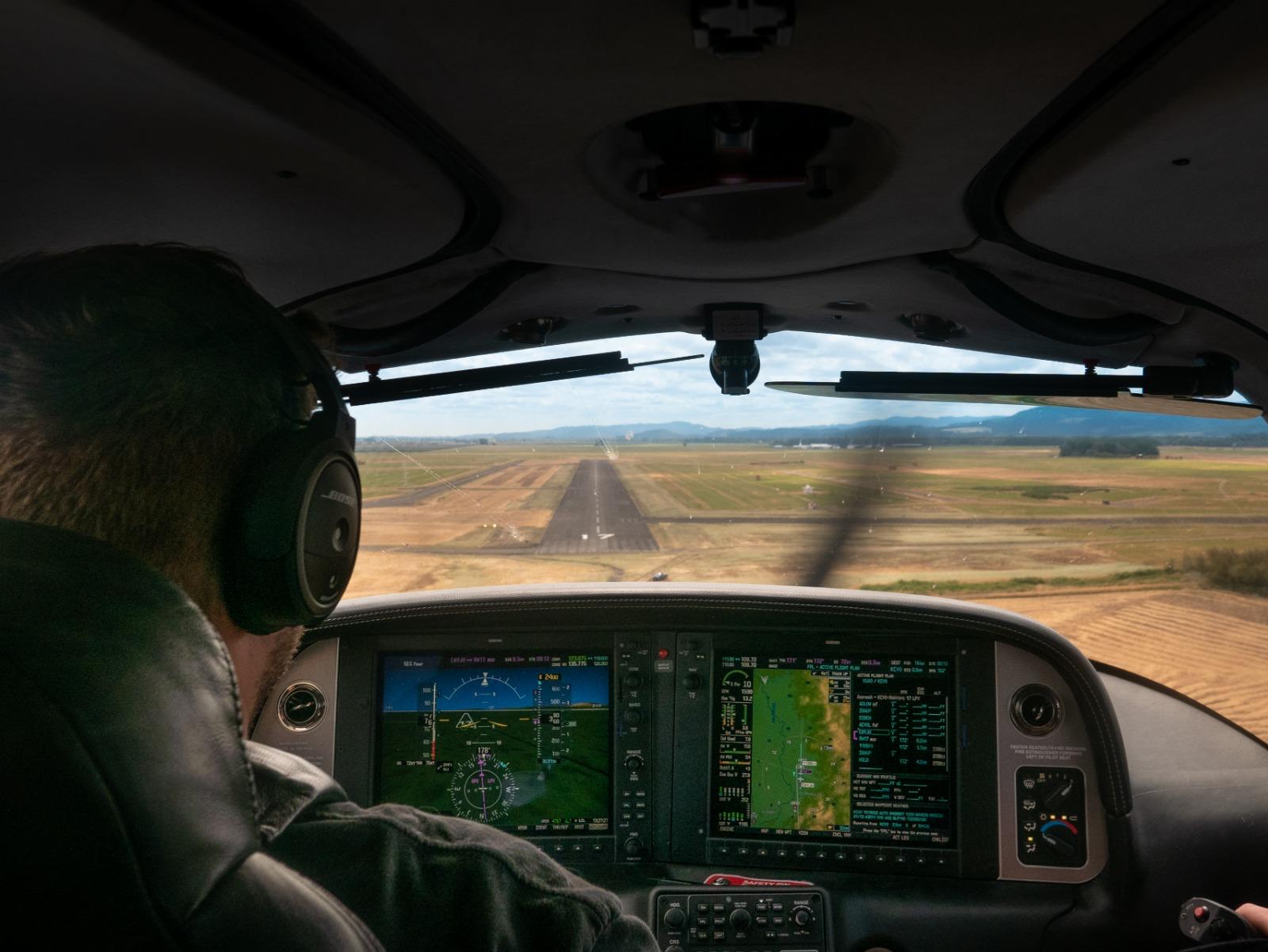
Instrument training in a school-owned aircraft means learning the avionics, the autopilot, and the quirks of that specific plane — and then transitioning to your own aircraft after you're rated. That transition takes time and money. Training in your own aircraft means every hour of instrument training is also building familiarity with the plane you'll actually fly IFR after you pass your checkride. In the Portland and Willamette Valley area, this is especially valuable for pilots flying glass-cockpit aircraft like the Cirrus SR20/SR22, Cessna 172S with G1000, or RV-12 with Dynon avionics.
Use Portland's Weather as a Training Asset
Oregon's Willamette Valley is one of the best places in the country to build real instrument experience — not because the weather is bad, but because it's variable in exactly the right ways. Low IFR days in winter. Coastal marine layer pushing inland. Convective activity in summer. Instrument approaches into KHIO, KUAO, and KSLE in actual IMC. Students who train in Portland's real weather conditions arrive at their checkride with genuine instrument experience, not just simulated approaches in clear skies.
Schedule Intensively During the Instrument Phase
Instrument currency is perishable. A student who trains once a week loses approach proficiency between lessons and spends the first 20 minutes of every session re-establishing scan patterns. Students who train 3–4 times per week during the instrument phase maintain currency, build on each lesson, and complete the rating in significantly fewer total hours. The accelerated IFR approach treats the instrument rating as a focused sprint, not a slow marathon.
Use a CFII Who Flies IFR Regularly
There's a meaningful difference between a CFII who teaches instrument flying and a CFII who flies IFR regularly in real conditions. The latter has current, practical knowledge of Portland Approach procedures, TRACON handoffs, realistic weather decision-making, and the specific challenges of flying IFR in the Pacific Northwest. That real-world knowledge transfers directly to students in ways that textbook-only instruction cannot.
INSTRUMENT TRAINING AIRPORTS IN THE WILLAMETTE VALLEY
The Portland metro area and Willamette Valley offer an exceptional range of training airports for instrument work. Hillsboro Airport (KHIO) provides ILS, RNAV, and VOR approaches in a Class D environment with regular commercial traffic — excellent for learning to navigate a busy airspace. Troutdale Airport (KTTD) sits just east of Portland with approaches over the Columbia River Gorge. Scappoose Industrial Airpark (KSPB) offers a quieter environment for building initial approach proficiency.
South of Portland, Aurora State Airport (KUAO) is one of the busiest general aviation airports in Oregon and provides excellent IFR training in a non-towered environment — critical for pilots who will fly IFR into non-towered airports throughout the Pacific Northwest. Salem Airport (KSLE) offers Class D airspace with ILS approaches and regular commercial service, providing realistic IFR training in a controlled environment.
Dom The CFI conducts instrument training at all five of these airports, building a comprehensive IFR skill set that covers the full range of approach types, airspace classes, and weather conditions that Oregon pilots actually encounter.
WHAT CHECKRIDE READINESS ACTUALLY LOOKS LIKE
Too many instrument students arrive at their checkride having logged the required hours but lacking the genuine proficiency that the ACS demands. They've flown approaches in clear skies with a safety pilot but never in actual IMC. They've memorized procedures but can't execute them under workload. They can fly a single approach but struggle with the full IFR flight — departure, en route, approach, missed approach, alternate.
Checkride readiness in the Dom The CFI program means you can fly a complete IFR flight from departure to landing in actual IMC conditions, manage ATC communications without losing aircraft control, execute all approach types (ILS, RNAV, VOR, NDB) to ACS standards, handle partial panel failures, and make sound weather decision-making calls. That's the standard — and it's achievable in 50–65 hours with the right instructor and the right method.
YOUR INSTRUMENT RATING READINESS CHECKLIST
50 hours cross-country PIC time logged
40+ hours actual or simulated instrument time
15+ hours with a CFII (Dom The CFI)
Instrument Rating written exam passed (70% or higher)
Proficient on ILS, RNAV, and VOR approaches to ACS standards
Comfortable with partial panel and unusual attitude recovery
Solid ATC communication in Class B, C, D, and E airspace
Weather decision-making and flight planning in IMC
Checkride oral preparation complete
FREQUENTLY ASKED QUESTIONS
Q: How long does it take to get an instrument rating in Portland, Oregon?
With an accelerated Part 61 approach and consistent scheduling (2–3 lessons per week), motivated students in Portland, Aurora, and Salem typically complete their instrument rating in 3–5 months. The FAA requires a minimum of 50 hours of cross-country PIC time and 40 hours of actual or simulated instrument time. Real-world completion typically requires 50–65 total instrument hours.
Q: How much does an instrument rating cost in Portland, OR?
At a Part 141 school in Portland, instrument rating training costs $8,000–$14,000 including instruction and aircraft rental. With Dom The CFI under Part 61 at $60/hr (student provides aircraft), instruction costs for the instrument rating are typically $3,000–$3,900 — plus the FAA written exam fee ($175), checkride examiner fee ($400–$600), and your aircraft operating costs.
Q: What is the best way to study for the instrument rating written exam?
The most effective approach is to use a structured ground school program (Sporty's, King Schools, or Gleim) combined with direct correlation to your in-cockpit training. Study the topic you'll practice in the cockpit that week. For Portland-area students, the FAA's Instrument Flying Handbook and the AIM are essential references, particularly for Pacific Northwest-specific weather and airspace procedures.
Q: Can I get my instrument rating in my own aircraft in Portland?
Yes. Part 61 instrument training allows you to train in your own aircraft as long as it meets the requirements for instrument flight (two-axis autopilot or safety pilot for simulated instrument work, appropriate avionics). Dom The CFI provides instrument instruction at KHIO, KTTD, KSPB, KUAO, and KSLE in student-provided aircraft.
Q: What airports does Dom The CFI use for instrument training in Oregon?
Dom The CFI conducts instrument training at Hillsboro Airport (KHIO), Troutdale Airport (KTTD), Scappoose Industrial Airpark (KSPB), Aurora State Airport (KUAO), and Salem Airport (KSLE). All five airports have published instrument approaches and provide excellent training environments for the full range of IFR procedures.
Portland · Aurora · Salem, OR
READY TO EARN YOUR IFR TICKET?
BOOK A FREE CONSULTATION.
We'll review your logbook, talk about your aircraft and avionics, and build a realistic instrument training plan. No stage check fees, no materials surcharges, no front desk — just one CFII and a clear path to your IFR ticket.
Book a Free Call
Book a Free Call$60/hr instruction · No stage check fees · No CFI reassignment · KHIO · KUAO · KSLE