THE STATISTIC NOBODY IN THE INDUSTRY WANTS TO TALK ABOUT
Eighty percent of student pilots who begin flight training never complete their private pilot certificate. That number has been consistent for decades. Flight schools know it. The FAA knows it. Independent CFIs know it. And yet, when you walk into a flight school front desk in Portland, Oregon, nobody mentions it.
They show you the shiny aircraft. They quote you the FAA minimum of 40 hours. They hand you a brochure with a smiling student in front of a Cessna. What they don't tell you is that the student in that photo is statistically more likely to quit than to finish — and that the system they're selling you is specifically designed in ways that make quitting more likely, not less.
This isn't cynicism. It's a structural reality. Understanding why students quit — and why the Part 141 school model in Portland, Aurora, and Salem produces these outcomes — is the first step toward choosing a different path and actually finishing what you started.
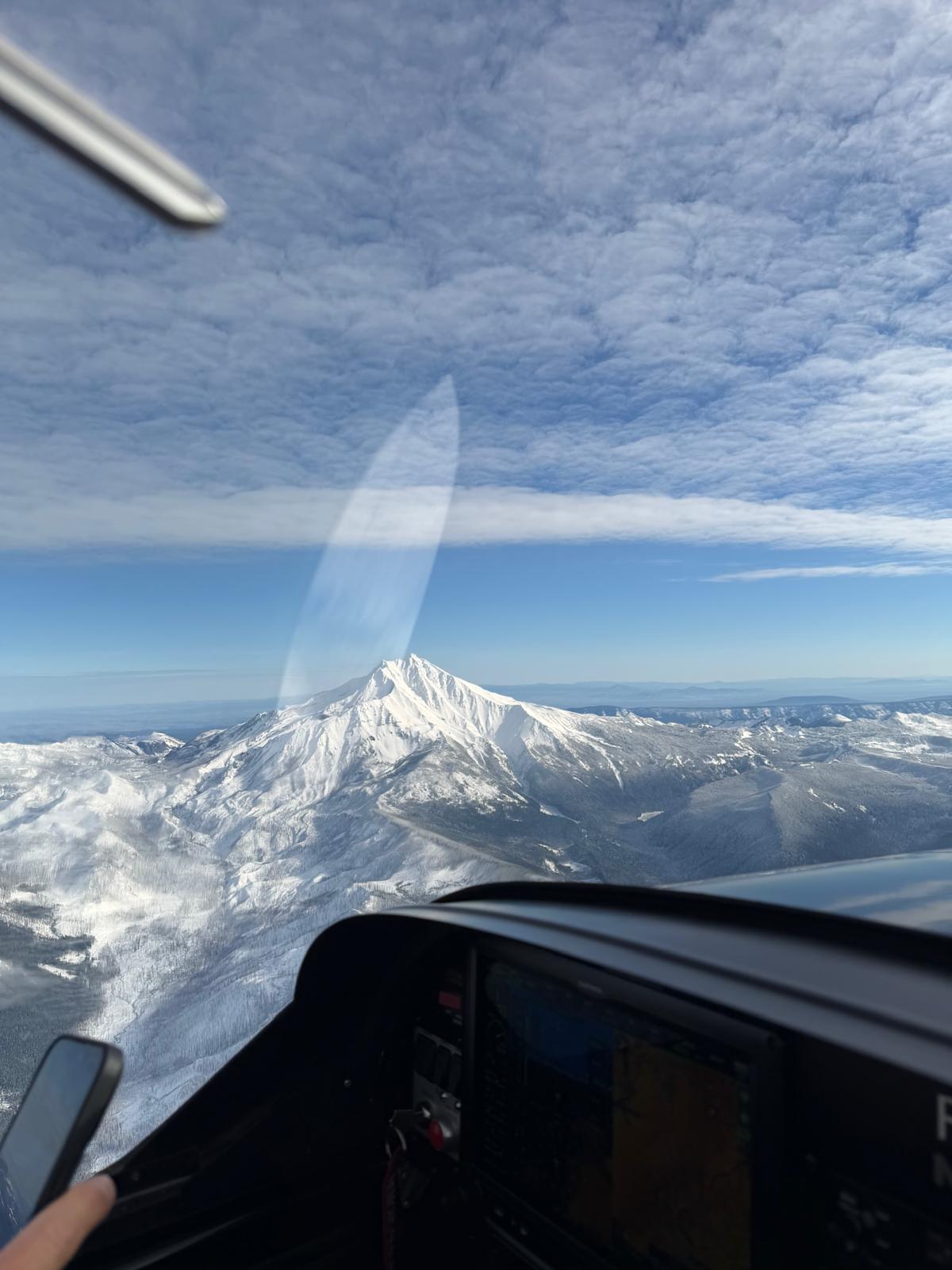
Flying over the Oregon Cascades — the kind of flight that reminds you why you started. Most students quit before they ever get here.
THE 5 TRAPS THAT KILL STUDENT PILOT PROGRESS
The Hour-Milking CFI
Flight instructors at Part 141 schools and large Part 61 academies are building time toward the 1,500-hour ATP minimum. Their financial incentive is to keep you flying — not to get you to your checkride efficiently. Lessons run long. Ground review stretches. Maneuvers get repeated without a clear reason. Every extra hour is another $88–$95 in instruction plus $163–$241 in aircraft rental. The CFI doesn't mean to harm you — but the system's incentives are misaligned with your goal.
The Rotating Instructor Problem
You spend 15 hours building rapport with your CFI. They learn how you process information, what makes you tense up on landings, how you respond to critique. Then they get hired at a regional airline and you're handed to someone new. The new instructor doesn't trust your logbook. They reset your training. You repeat maneuvers you've already passed. Momentum dies. Confidence erodes. Many students never recover from this transition — they simply stop scheduling lessons.
The Scheduling Trap
Part 141 schools run on their calendar, not yours. Ground school meets Tuesday and Thursday evenings. Stage checks happen on the school's timeline. If your work schedule changes, if your kid gets sick, if Oregon weather grounds you for two weeks — the school's pipeline doesn't pause. You fall behind. You lose currency. You pay for makeup lessons. The rigid structure that was supposed to make training efficient becomes the reason you can't finish.
The Hidden Cost Avalanche
The brochure says $8,000–$10,000 for a private pilot certificate. That's based on the FAA minimum of 40 hours. The Oregon real-world average is 60–75 hours. Add $163–$241/hr in aircraft rental, $175 for the FAA written exam, $400–$600 for headsets and materials, $400–$600 for the checkride examiner, and the cost of repeating maneuvers your rotating CFI taught incorrectly the first time. The final bill is typically $18,000–$28,000 at a Portland-area flight school. Students who weren't budgeting for that number stop training when the money runs out.
The Confidence Collapse
Flight training is inherently humbling. You will make mistakes. You will have bad lessons. The question is whether your instructor responds to those moments with patience and a clear correction strategy — or with frustration, vague feedback, and a sense that you're not cut out for this. Production-line schools process dozens of students simultaneously. Instructors are stretched thin. Students who struggle don't get extra attention — they get passed along or quietly encouraged to stop. The confidence collapse that follows is the final reason 80% never finish.
THE COMMON THREAD: MISALIGNED INCENTIVES
Look at all five traps carefully and you'll notice they share a root cause: the flight school's financial incentives are not aligned with your goal of finishing your certificate efficiently. Schools make money on aircraft rental hours. CFIs make money on instruction hours. The longer your training takes, the more revenue the school generates. There is no financial incentive — and in many cases there is a financial disincentive — to get you to your checkride in the minimum time possible.
This is not a conspiracy. It's not malice. It's just the natural result of a business model where the product (flight hours) and the outcome (certificate earned) are decoupled. The school gets paid whether you pass or quit. The CFI gets paid whether you progress or plateau. The system has no mechanism to align the school's revenue with your success.
Independent Part 61 CFIs operate under a fundamentally different model. There is no aircraft rental markup. There is no school overhead to cover. There is no CFI pipeline to the airlines creating turnover. The instructor's reputation — and their ability to attract new students through referrals — depends entirely on getting students to their checkride. The incentives are finally aligned.
HOW TO FINISH: THE FIVE DECISIONS THAT CHANGE EVERYTHING
Choose an instructor with no time-building incentive
An independent CFI who is already certificated at the level they want to fly has no financial reason to extend your training. Their income comes from your progress, not your hours.
Demand a written training plan with milestones
Before your first lesson, ask your CFI for a written training outline with specific milestones — solo, cross-country, checkride readiness. If they can't produce one, find someone who can.
Train in your own aircraft if possible
Aircraft ownership eliminates the single largest variable cost in flight training: rental markup. It also means you're building familiarity with the specific aircraft you'll fly after you're certificated.
Schedule with consistency, not convenience
Students who train 2–3 times per week finish. Students who train once a week when it's convenient lose currency, repeat maneuvers, and eventually stop scheduling. Treat your training like a commitment, not a hobby.
Choose a CFI who will still be there at your checkride
Ask directly: 'Are you planning to leave for the airlines or another position in the next 12 months?' An independent CFI who has built their own business has a very different answer than a time-builder at a school.
WHAT FINISHING ACTUALLY LOOKS LIKE
The students who finish their private pilot certificate in Portland, Aurora, and Salem share a few common traits. They chose an instructor who was invested in their success, not their hours. They had a clear training plan from day one. They trained consistently — not perfectly, but consistently. And when they had a bad lesson, they had an instructor who diagnosed the problem and corrected it, rather than one who moved on to the next student.
They also understood the real cost before they started. They weren't surprised by the gap between the FAA minimum and the Oregon average. They budgeted for 60–70 hours, not 40. They chose a training model — Part 61 with an independent CFI — that gave them the flexibility to train around their lives instead of restructuring their lives around a school's schedule.
The 20% who finish aren't more talented than the 80% who quit. They just made better structural decisions at the start. You can make those same decisions today — and the first one is choosing the right instructor.
FREQUENTLY ASKED QUESTIONS
Q: Why do so many student pilots quit before getting their license?
The primary reasons student pilots quit in Oregon and nationwide are: financial shock from costs exceeding initial quotes, CFI turnover disrupting training momentum, scheduling conflicts with rigid Part 141 school structures, loss of confidence from inconsistent instruction, and the absence of a clear progress timeline. Independent Part 61 CFIs address all five of these failure points directly.
Q: What percentage of student pilots finish their private pilot certificate?
Approximately 20% of student pilots who begin training complete their private pilot certificate. The 80% dropout rate is consistent across the United States, including Oregon. The primary causes are financial, scheduling, and instructor continuity issues — not a lack of aptitude or desire.
Q: How can I avoid quitting flight training?
Choose a Part 61 independent CFI with no financial incentive to extend your training, a flexible schedule that works around your life, and a commitment to see you through from first lesson to checkride. Get a clear training plan with milestones before you start. Understand the full realistic cost upfront. Train in your own aircraft if possible to eliminate rental costs. In Portland, Aurora, and Salem, Dom The CFI offers all of these.
Q: How long does it take to get a private pilot license in Portland, Oregon?
With flexible Part 61 training and consistent scheduling, motivated students in Portland, Aurora, and Salem typically complete their private pilot certificate in 4–8 months. The timeline depends on weather, scheduling frequency, and individual learning pace. The FAA minimum is 40 hours; the Oregon real-world average is 60–70 hours.
Portland · Aurora · Salem, OR
DON'T BECOME A STATISTIC.
BOOK A FREE CONSULTATION.
We'll talk about your goals, your schedule, and your aircraft situation — and I'll tell you exactly what it will take to get you to your checkride. No stage check fees, no rotating instructors, no hidden cost avalanche. Just one CFI and a realistic plan.
Book a Free Call
Book a Free Call$60/hr instruction · No stage check fees · No rotating instructors · One CFI, start to checkride